Strategic Use of Free Daily Planner for Kids Canva
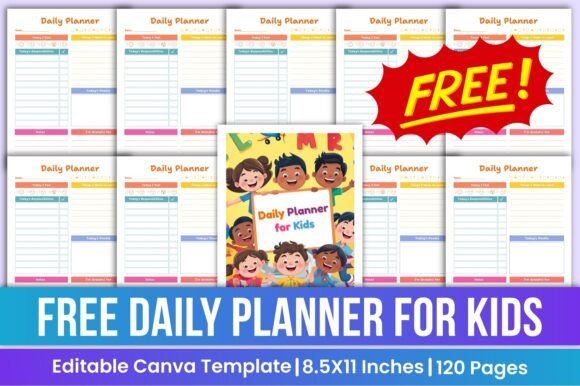
The Free Daily Planner for Kids Canva is more than just a tool—it’s a strategic resource designed to help children ages 5–12 develop essential life skills in a structured, engaging way. This planner offers a simple yet powerful framework that supports daily habit-building, organization, and emotional awareness. By integrating tasks, goals, priorities, and mood tracking into each undated page, it encourages responsibility, independence, and self-awareness in young users. What makes this tool particularly valuable is its adaptability: the Free Daily Planner for Kids Canva is fully editable, allowing customization through text, colors, fonts, and layout styles. This flexibility ensures that the planner can be tailored to suit individual needs, making it a versatile asset for parents, educators, and caregivers.
Why Strategic Planning Matters for Children
Children are not just growing physically—they are also developing cognitive, emotional, and social skills. The Free Daily Planner for Kids Canva serves as a bridge between these developmental stages by providing a visual and interactive way for kids to engage with their daily routines. Strategic use of this planner can help children understand the importance of time management, goal setting, and self-reflection. These are critical skills that lay the foundation for future academic and personal success.
For adults involved in raising or supporting children, the Free Daily Planner for Kids Canva offers a practical solution to streamline daily responsibilities while fostering independence. By incorporating elements like task lists, goal-setting prompts, and mood tracking, the planner becomes a tool that supports both the child’s development and the parent’s ability to manage their own time effectively.
How the Free Daily Planner for Kids Canva Supports Long-Term Goals
One of the key advantages of the Free Daily Planner for Kids Canva is its ability to support long-term goals through consistent, structured planning. For instance, a child learning to manage their homework and extracurricular activities can use the planner to set weekly goals and track progress over time. This process not only builds discipline but also reinforces the idea that small, consistent actions lead to meaningful outcomes.
Similarly, educators and parents can use the Free Daily Planner for Kids Canva to align daily activities with broader educational or behavioral objectives. For example, a teacher might incorporate the planner into classroom routines to help students develop time management skills, while a parent could use it to encourage reading habits or creative projects. The planner’s editable nature allows for seamless integration into existing workflows, making it an adaptable tool for diverse environments.
Practical Examples of Strategic Use
- Academic Planning: A child preparing for exams can use the Free Daily Planner for Kids Canva to allocate specific times for studying, reviewing notes, and taking breaks. This helps build a routine that supports academic performance and reduces stress.
- Behavioral Development: Parents can use the planner to track positive behaviors such as completing chores or showing kindness, reinforcing these actions through consistent recognition.
- Creative Projects: The planner’s space for goals and priorities can be used to outline steps for creative endeavors like art, writing, or music, helping children stay focused and motivated.
When to Use the Free Daily Planner for Kids Canva
The Free Daily Planner for Kids Canva is best used when there is a clear purpose or objective. It is particularly effective during times when children are transitioning into new routines, such as starting school, beginning a new hobby, or adjusting to a different schedule. It is also useful for reinforcing positive habits or addressing specific challenges, such as improving focus or managing emotions.
However, it is important to recognize that the planner is not a one-size-fits-all solution. Its effectiveness depends on how it is integrated into a child’s daily life. For instance, using the planner without a clear structure or purpose may lead to confusion or disengagement. Therefore, it is crucial to approach the Free Daily Planner for Kids Canva with intention and strategy.
Key Considerations Before Relying on the Free Daily Planner for Kids Canva
- Define Clear Objectives: Before implementing the Free Daily Planner for Kids Canva, identify the specific goals you want to achieve. Whether it’s improving time management, encouraging independence, or supporting emotional growth, having a clear vision will guide how the planner is used.
- Align with Child’s Needs: Every child has unique needs and learning styles. Customize the planner to reflect the child’s interests, abilities, and developmental stage. This ensures that the tool remains relevant and engaging.
- Monitor Progress and Adjust: Regularly review how the planner is being used and make adjustments as needed. This includes updating goals, modifying layouts, or introducing new features based on the child’s evolving needs.
- Encourage Ownership: The Free Daily Planner for Kids Canva should be a collaborative tool. Encourage the child to take ownership of their planner by allowing them to personalize it and contribute to their own goals and reflections.
Risks of Using the Free Daily Planner for Kids Canva Without Context
While the Free Daily Planner for Kids Canva is a valuable resource, its effectiveness relies heavily on context and purpose. Using it without clear goals or alignment with a child’s developmental stage can lead to several risks:
- Lack of Engagement: If the planner is not tailored to the child’s interests or needs, they may lose interest quickly, reducing its impact.
- Overload or Confusion: Too many tasks or unclear instructions can overwhelm a child, leading to frustration rather than motivation.
- Missed Learning Opportunities: Without intentional use, the planner may not support the desired skill development, such as emotional awareness or responsibility.
- Inconsistent Habits: Without a clear structure or routine, the planner may fail to establish consistent habits, undermining its intended purpose.
How to Use the Free Daily Planner for Kids Canva Intentionally
To maximize the benefits of the Free Daily Planner for Kids Canva, it is essential to use it intentionally. Start by identifying the primary objective—whether it’s building daily habits, supporting emotional growth, or enhancing productivity. Then, integrate the planner into the child’s daily routine in a way that feels natural and supportive.
For example, if the goal is to improve focus, the planner can be used to allocate specific times for study sessions, breaks, and reflection. If the objective is emotional awareness, the mood tracking section can be utilized to encourage self-expression and understanding. By aligning the planner with specific goals, it becomes a powerful tool for growth and development.
Additionally, consider how the planner fits into the broader context of the child’s life. Does it complement other educational tools or family routines? How can it be adapted to accommodate changes in the child’s schedule or interests? These considerations ensure that the Free Daily Planner for Kids Canva remains a dynamic and effective resource.
Decision-Making Guidance for Adults
As an adult, whether you are a parent, educator, or caregiver, your role is to guide the child’s use of the Free Daily Planner for Kids Canva. This involves making informed decisions about how to introduce, customize, and maintain the planner. Here are some strategic considerations:
- Start Small: Introduce the planner gradually, focusing on one or two key areas at a time. This helps the child feel less overwhelmed and more engaged.
- Involve the Child: Allow the child to have a say in how the planner is used. This fosters a sense of ownership and increases the likelihood of long-term engagement.
- Review and Reflect: Regularly assess how the planner is working and make adjustments based on feedback and observations. This ensures that it continues to meet the child’s evolving needs.
- Use as a Tool, Not a Constraint: The Free Daily Planner for Kids Canva should support flexibility and creativity, not limit them. Encourage the child to think critically and explore new ideas within the framework of the planner.
Conclusion
The Free Daily Planner for Kids Canva is a strategic, customizable tool that supports children’s growth in multiple dimensions. When used intentionally, it can foster responsibility, independence, and emotional awareness while aligning with broader educational and developmental goals. However, its effectiveness depends on thoughtful implementation, clear objectives, and ongoing adaptation. By approaching the planner with purpose and flexibility, adults can create a meaningful experience that empowers children to thrive.