Daily Routine Planner Canva Editable
Imagine waking up with clarity—not just a to-do list, but a thoughtful rhythm for your day. The Daily Routine Planner Canva Editable helps you build that rhythm intentionally. It’s not another rigid schedule template; it’s a flexible, printable planner designed to support real life: shifting priorities, unexpected interruptions, energy fluctuations, and personal growth. Whether you're a freelancer juggling client calls and creative work, a teacher balancing lesson prep and self-care, or a student navigating classes and mental wellness—the planner meets you where you are.
Why This Isn’t Just Another Printable Planner
Many people assume all daily planners are interchangeable—until they print one and realize the layout doesn’t adapt to their actual workflow. The Daily Routine Planner Canva Editable stands out because it’s built for customization *before* printing. You don’t just fill in blanks—you adjust time blocks, reorder sections, tweak fonts, or even add your brand colors if you’re using it professionally. That flexibility matters: a 9 a.m.–5 p.m. office worker needs different spacing than a night-shift nurse or a remote entrepreneur who starts work at noon.
It also includes intentional design cues—like mood check-ins spaced across morning, afternoon, and evening—not as an afterthought, but as part of how you learn your own patterns over time. That’s why users report stronger consistency with habit tracking: when reflection feels natural, not forced, it sticks.
Common Missteps—and How to Avoid Them
Mistake #1: Assuming “editable” means fully customizable in any tool. Not all Canva-editable files open smoothly—or retain formatting—in free versions of Canva or third-party editors. Some sellers label templates as “Canva editable” but deliver low-res PNGs or locked PDFs that only allow text changes (not layout shifts). Always verify the file type before purchase: look for a direct Canva link or a .CANVA file—not just a PDF labeled “editable.” If the listing only shows static previews without a live demo or video walkthrough, pause. Test the editability yourself first by opening a sample in Canva’s free editor.
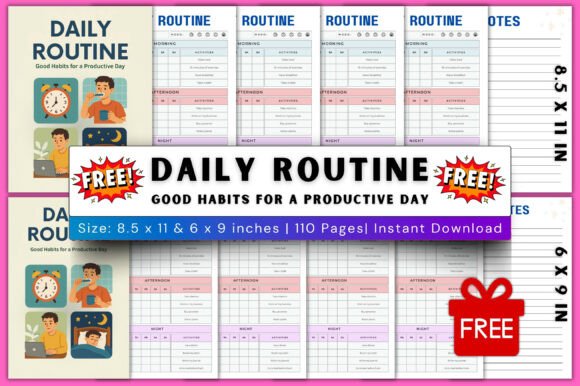
Mistake #2: Overlooking size compatibility with your printer or binder. The Daily Routine Planner Canva Editable comes in two practical sizes: 6 x 9 inches (ideal for slipping into a small notebook or tote) and 8.5 x 11 inches (better for detailed writing and desktop use). But here’s what’s often missed—some users download the 6x9 version, then try to print it full-page on letter paper without scaling adjustments. The result? Tiny text and cramped margins. Before printing, go to your printer settings and select “Actual Size” or “100% Scale”—never “Fit to Page.” And if you plan to hole-punch and store it, confirm your binder ring size matches the planner’s margin allowances (most include 0.5-inch side margins for this reason).
Mistake #3: Treating habit tracking as a checkbox game. It’s easy to fill in every box for “drank water” or “meditated” for three days—then abandon the tracker when life gets busy. The Daily Routine Planner Canva Editable avoids this trap by integrating habits with mood and notes. Instead of asking *“Did I do it?”*, it gently prompts *“How did it feel?”* and *“What got in the way?”*. One user, a marketing consultant, realized her “exercise” habit dropped on high-meeting days—not because she lacked willpower, but because she hadn’t scheduled movement *between* calls. She used the planner’s afternoon block to add a 7-minute stretch reminder. Small shift. Big sustainability.
What to Check Before You Download or Print
- File integrity: Does the download include both PDF (for printing) and PNG/JPG (for digital note-taking)? Reputable versions offer all three—not just one format.
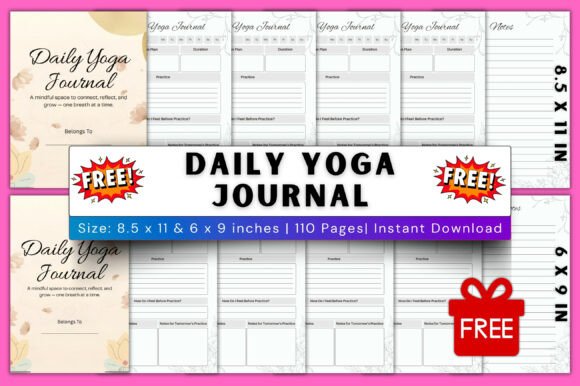
- Page count realism: The planner includes 110 guided pages—but that includes cover, instructions, and blank reflection spreads. Your usable daily pages are 100. If you plan to use it daily, that’s just over three months. Consider whether you’ll want to reprint or reuse pages digitally.
- Font licensing: If you’re editing in Canva and plan to share screenshots (e.g., on Instagram or in a team doc), confirm the included fonts are free for commercial use. Some templates use premium fonts that require separate licensing—even in Canva’s free tier.
- Mobile-friendliness: While the planner is printable, many users annotate it digitally using apps like GoodNotes or Notability. Check if the PDF has proper layers and tap-friendly fields. A flat image-based PDF won’t let you type or highlight efficiently on tablets.
Better Ways to Start—Without Overcommitting
You don’t need to begin on Monday. Try starting midweek with just *one* section—say, the evening reflection—just to notice how your energy shifts. Or use the habit tracker for a single, low-stakes behavior (like pausing before checking email) before layering in more. The Daily Routine Planner Canva Editable works best when it supports observation—not perfection.
Another realistic tip: print only the next 7–10 days at a time. It reduces pressure and lets you adjust based on what’s actually working. One educator printed weekly batches, then added color-coded stickers for “lesson prep,” “grading,” and “student check-ins”—turning abstract tasks into visual anchors.
And if you’re sharing this with a team or class? Use Canva’s collaboration features to create a shared version—then export individual copies with personalized notes. No need for identical layouts. One freelance designer uses the 6x9 version for client-facing timelines and the 8.5x11 for her deep-work sprints. Same planner. Different purpose.
A Tool That Grows With You
The value of the Daily Routine Planner Canva Editable isn’t in flawless execution—it’s in gentle recalibration. It doesn’t ask you to overhaul your life overnight. It asks you to notice where your attention goes, where your energy dips, and where small adjustments bring real relief.
That’s why so many return to it—not as a taskmaster, but as a quiet companion in building days that feel aligned, not automated. When structure serves intention—not the other way around—that’s when balance stops being aspirational and starts showing up, page after thoughtful page.