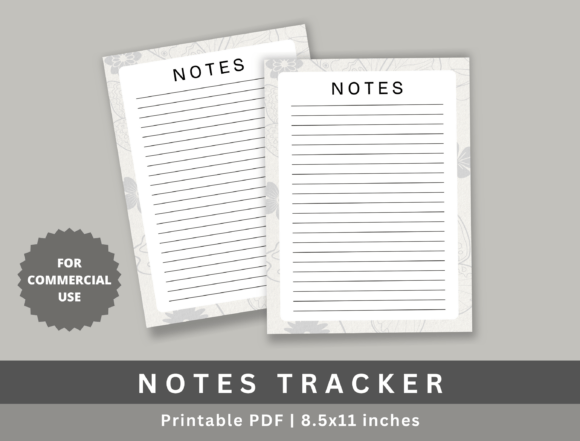
Notes Tracker
If you've spent time formatting journal interiors only to hit KDP’s upload quirks—bleed warnings, resolution alerts, or inconsistent margins—you’ll recognize the quiet relief of a truly print-ready interior. The Notes Tracker isn’t another generic PDF filler. It’s a single-page, 8.5 × 11 inch KDP interior design built from the ground up for low-content publishing: clean, intentional, and production-smart.
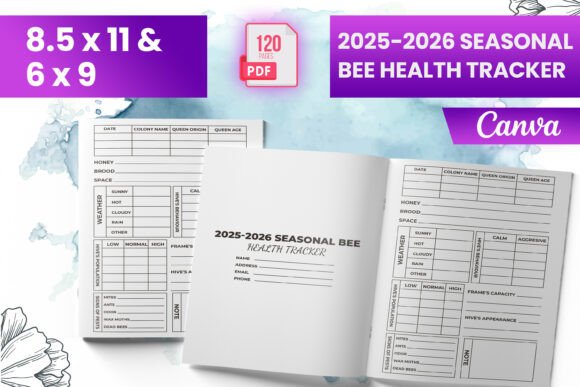
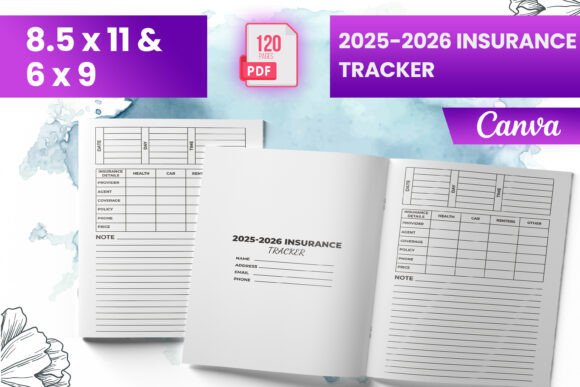
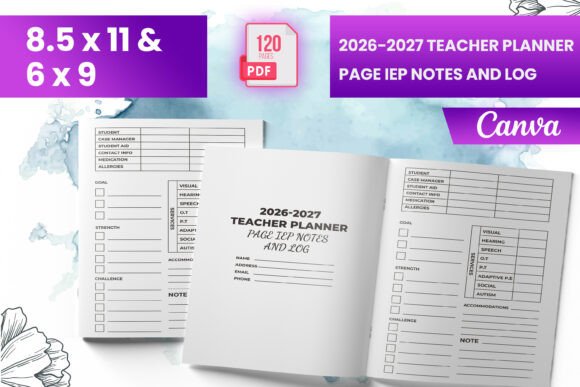
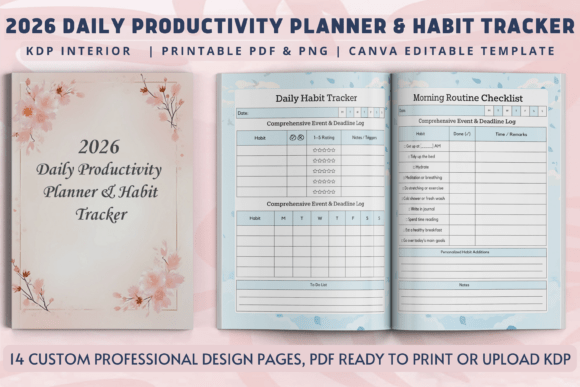
Visually, it leans into refined simplicity—no ornate borders, no distracting textures, no competing visual noise. A subtle header area anchors the top with balanced whitespace; a structured yet unobtrusive grid guides note-taking without enforcing rigidity. The layout breathes. It doesn’t shout. It supports—quietly, consistently, professionally. That restraint is deliberate: it lets your brand voice, cover design, or customer’s handwriting take center stage. Think of it as the interior equivalent of a well-tailored shirt—unseen but essential to how the whole thing holds together.
Where This Interior Fits Naturally
The Notes Tracker works hardest where clarity and consistency matter most: in planner collections, productivity journals, habit trackers, meeting notebooks, and branded client workbooks. Its neutral tone makes it equally at home in a minimalist entrepreneur’s daily planner and a therapist’s session logbook. Because it avoids trend-driven flourishes—no faux-vintage paper overlays, no forced “hand-drawn” lines—it stays relevant across seasons and audiences.
You’ll find it especially effective when paired with serif or geometric sans serif covers—its clean structure creates visual harmony without mimicry. In editorial design contexts (like companion workbooks for nonfiction titles), it provides reliable scaffolding for readers to annotate, reflect, and apply ideas. And for small business owners bundling digital + physical products, it bridges the gap: customers get a tangible, cohesive extension of your brand—not just a blank page with a logo slapped on top.
Why “Ready-to-Upload” Actually Means Something
KDP’s interior requirements are precise—and unforgiving. Margins must be exact. Resolution must be 300 DPI at full size. Fonts must be embedded or outlined. Bleed must be zero unless intentionally added. Many creators waste hours adjusting line weights, re-exporting from Canva, or troubleshooting grayed-out text in preview mode. The Notes Tracker sidesteps all that.
It arrives as a single, flattened, print-optimized PDF—no layers, no hidden objects, no RGB traps. Every element renders crisply at actual size. The spacing between rows? Tested across KDP’s previewer and physical proof copies. The header height? Designed to avoid cutoff on standard binding. Even the file size sits comfortably under KDP’s limits—no compression artifacts, no pixelation in fine lines.
This isn’t about convenience alone. It’s about predictability. When you’re launching a 12-title planner series, consistency across interiors builds recognition. When your audience buys three journals from your store, they should feel the same intuitive rhythm—not hunt for where the date line falls or why one interior feels cramped while another feels hollow.
Design Integrity Without Compromise
Some low-content templates sacrifice usability for aesthetics—overly narrow columns, cramped headers, or grids so tight they discourage writing. Others go too far in the opposite direction: sprawling whitespace that feels empty instead of intentional. The Notes Tracker finds the middle ground.
The vertical rhythm follows typographic best practices: generous leading between rows (not so much that notes float, not so little that they crowd), clear visual separation between header and body, and margin proportions calibrated for both writing comfort and KDP’s safe zone. It uses negative space purposefully—not as filler, but as breathing room that directs attention and reduces cognitive load.
That matters for engagement. A reader flipping through a sample on Amazon scans faster when hierarchy is clear. A busy professional jotting down action items mid-meeting needs immediate visual cues—not decoding where to start. This interior delivers that instinctively.
Licensing, Flexibility, and Real-World Use
You’re free to use the Notes Tracker commercially—no attribution required, no per-unit fees, no platform restrictions. Upload it directly to KDP, Etsy, Gumroad, or your own storefront. Bundle it with custom covers, add your logo in the header, or leave it clean for white-label partners. There’s no need to “unlock” features or upgrade to a pro version.
Importantly, it’s designed for reuse—not one-off uploads. If you manage multiple niches (e.g., fitness planners, finance trackers, creative prompts), this interior serves as a consistent backbone. You keep your branding distinct through covers and marketing—but maintain operational efficiency behind the scenes. No redesigning interiors for every new title. No reinventing spacing rules. Just reliable, repeatable quality.
Test it alongside your existing assets: drop it into a mockup next to your current bestseller. Compare how the page turn feels. Check if your usual font pairings still hold weight against its structure. See whether your audience’s reviews mention “easy to write in” or “clean layout”—those qualitative signals often trace back to interior design choices more than cover art.
And if you're evaluating other interiors? Ask three things: Does it survive KDP’s previewer without scaling or shifting? Does it support handwriting (not just typing) without crowding or awkward line breaks? Does it feel like part of a system—not an afterthought? The Notes Tracker answers yes—to all three.