Cute Cat Notebook Vector
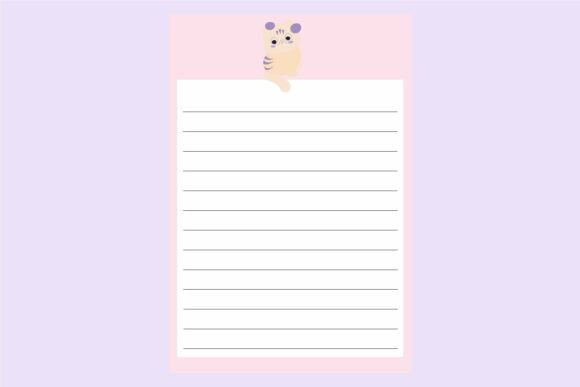
A Cute Cat Notebook Vector is more than a whimsical illustration—it’s a purpose-built visual asset designed for clarity, adaptability, and intentional communication. At its core, it features a friendly cartoon cat seated atop a lined notepad against a soft pink-and-purple background, with the notebook interior fully rendered as vector geometry. Delivered in scalable EPS and SVG formats—and also available as high-resolution 300 dpi PNG and JPG files—it’s engineered for precision across print, digital interfaces, presentations, learning materials, and brand collateral. Its origin in New Jersey reflects a grounded, detail-oriented approach to illustration: no placeholder textures, no raster dependencies, no guesswork in scaling or editing.
Why This Asset Fits Real Work—Not Just Decoration
When professionals choose visual assets, they’re rarely selecting for “cuteness” alone. They’re solving for function: consistency in branding, speed in production, flexibility across platforms, and alignment with audience perception. The Cute Cat Notebook Vector supports those goals because it combines warmth with structure. The cat conveys approachability; the lined notepad signals organization, reflection, and written thought. That duality makes it unusually effective for contexts where tone and utility must coexist—like educator handouts, wellness journal templates, creative workshop slides, or small business onboarding kits.
Unlike generic clipart or overused stock vectors, this asset was built with editable layers and clean paths. Every element—the cat’s whiskers, the notebook’s binding, even the subtle shadow beneath the pad—is separable, recolorable, and scalable without distortion. That means you can adjust the purple-to-pink gradient to match your brand palette, isolate the cat for social media avatars, or extract just the lined page for printable PDF worksheets—all without outsourcing to a designer or paying for custom revisions.
Strategic Use Cases Across Roles
Different roles deploy the Cute Cat Notebook Vector with distinct objectives—not because the image changes, but because context shapes meaning:
- Educators and trainers embed it into lesson plans or student reflection sheets to soften cognitive load. A child or adult facing a blank page may hesitate; seeing a gentle cat “already sitting there” lowers the threshold to begin writing.
- Freelancers and consultants use it as a branded worksheet header—say, in a goal-setting workbook for clients. The visual cue reinforces that this isn’t busywork; it’s structured thinking with personality.
- Small business owners apply it to internal SOP documents or team meeting agendas. It subtly signals that process doesn’t have to feel sterile—and that attention to detail (the lined paper) pairs naturally with human-centered values (the cat).
- Bloggers and content creators repurpose the SVG to build animated explainer sequences—morphing the cat into a “thinking” pose, then “writing,” then “checking off”—to visualize progress without text overload.
Timing Matters: When This Vector Adds Value—and When It Doesn’t
There are moments when deploying the Cute Cat Notebook Vector strengthens your message—and others where it dilutes it. Use it when:
- You’re designing for an audience that responds well to warmth and familiarity—such as wellness practitioners, early-education providers, or lifestyle brands targeting women aged 25–45.
- Your material centers around personal development, journaling, habit tracking, or reflective practice—and you want the visual to reinforce intentionality, not distract from it.
- You need rapid iteration: launching a limited-run product line, testing landing page variants, or building a series of downloadable resources under tight deadlines.
Avoid it when:
- Your audience expects formal, technical, or highly regulated visuals—think legal compliance guides, medical device documentation, or financial audit reports.
- The cat’s expressive tone clashes with your existing brand voice (e.g., minimalist monochrome systems, industrial B2B tooling, or high-contrast accessibility-first interfaces).
- You’re using it purely as filler—slapping it onto a slide or webpage without adjusting color, scale, or placement to serve a specific user action or emotional cue.
Editing with Purpose—Not Just Convenience
Having editable formats—EPS, SVG, PNG, JPG—doesn’t guarantee better outcomes. It guarantees options. The difference lies in how deliberately you exercise them.
Before resizing the Cute Cat Notebook Vector for a mobile app icon, ask: Does the cat’s expression remain legible at 48×48 pixels? If not, simplify—hide the notebook, keep only the head and front paws, and test contrast against your UI background. Before recoloring the pink-to-purple gradient for a client’s brand, verify accessibility: does the new combination meet WCAG 2.1 AA contrast ratios for text overlays? Before inserting it into a printed workbook, confirm the SVG has been converted to outlines (not live fonts) and that bleed and trim marks align with your printer’s specifications.
These aren’t “extra steps.” They’re decision points that separate tactical execution from strategic deployment. Each edit should answer a question: What behavior do I want to support? What assumption about my audience am I validating? What outcome becomes easier—or harder—because of this change?
Risks of Context-Free Usage
Without clear intent, even a well-crafted asset like the Cute Cat Notebook Vector can erode credibility. Consider these real-world misalignments:
- A financial advisor includes it in a retirement planning guide. Clients may interpret the playfulness as undermining seriousness—even if the content is rigorous. The visual contradicts the expected emotional weight of the topic.
- A tech startup drops it into a developer API documentation site. Engineers scanning for syntax examples or error codes may dismiss the page as unserious or poorly prioritized.
- A nonprofit uses it across all donor communications—email headers, impact reports, event banners—without adjusting tone or composition. Overexposure flattens meaning; the cat stops signaling warmth and starts signaling repetition.
None of these outcomes reflect flaws in the asset itself. They reflect decisions made without mapping the visual to audience expectations, content hierarchy, or behavioral goals.
Long-Term Value Lies in Consistency, Not Novelty
The highest-return use of the Cute Cat Notebook Vector isn’t in one-off applications—but in deliberate, repeated integration across touchpoints where reflection, writing, or personal agency are central. Think of it as a visual anchor: same cat, same notepad, same underlying structure—but adapted with nuance.
For example, an online course creator might use:
- The full composition (cat + open notebook) in course welcome emails,
- A cropped version (just the notepad with faint cat silhouette in the corner) in printable journal PDFs,
- The cat alone—recolored to match module themes—in progress-tracking dashboards.
This creates recognition without rigidity. Learners begin to associate that visual shorthand with “my space to think”—which builds psychological safety and increases completion rates. That kind of continuity doesn’t happen by accident. It happens when you treat the Cute Cat Notebook Vector not as decoration, but as a design system component with defined usage rules.
Final Thought: Tools Serve Strategy—Not the Other Way Around
Assets like the Cute Cat Notebook Vector gain power only when anchored to decisions—not aesthetics. Ask yourself before use: What problem does this solve? Whose attention am I trying to hold—and why would this image help? What action do I want someone to take next, and how does this visual lower the barrier to that action?
If the answers are vague, pause. Revisit your goal. Adjust the asset—or set it aside entirely. The most effective visuals don’t shout. They clarify. They align. They make the next step feel both possible and natural. That’s how a cartoon cat on a notepad becomes more than charming—it becomes consequential.