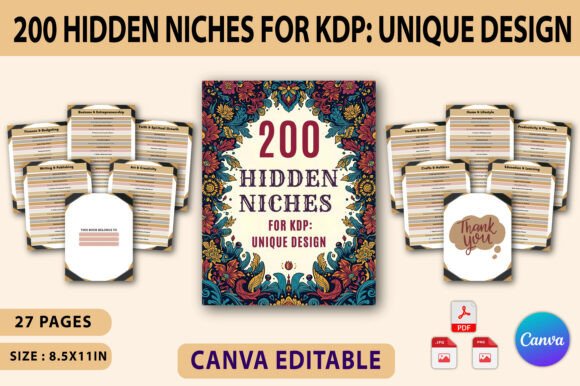
200 Hidden Niches for KDP Unique Design: A Creative Planner for KDP Creators
200 Hidden Niches for KDP Unique Design is more than just a list of ideas—it’s a strategic resource designed to help KDP creators uncover untapped markets, reduce competition, and build visually compelling books that stand out in Amazon’s vast marketplace. Whether you're an author, designer, or publisher, this guide offers structured direction to identify niche topics, align them with design aesthetics, and position your work for success.
Understanding the Role of Niche Selection in KDP Success
Before diving into the niches themselves, it's important to understand how niche selection impacts your KDP publishing journey. Choosing the right niche isn’t just about finding something you're passionate about—it’s about identifying gaps in the market where demand exists but supply is limited. This balance is key to profitability and visibility on Amazon.
Many KDP authors focus on popular categories like self-help or romance, which are saturated and highly competitive. 200 Hidden Niches for KDP Unique Design shifts the focus by offering 30 curated categories, each containing 10 sub-niches. These range from Faith & Spiritual Growth to Art & Creativity, ensuring a broad yet targeted approach to book creation.
How to Use the Guide Before Starting a Project
One of the most effective ways to use this planner is as a pre-project tool. Before you begin writing or designing, spend time exploring the 200 hidden niches. This helps you avoid common pitfalls such as creating content that's too similar to existing titles or not aligned with audience expectations.
For instance, if you're interested in productivity, the guide might suggest a niche like “Time Management for Remote Workers.” You can then research what’s already available, analyze gaps, and decide whether to create a new title or refine an existing idea. This step ensures your project is both original and market-ready.
Additionally, the guide includes design inspiration for each niche—such as minimalist, floral, pastel, or vintage styles—which can be used to inform your cover and interior design. This level of detail makes it easier to visualize your book before you even start writing.
During the Creation Process: Keeping Your Vision Focused
As you move through the creation process, 200 Hidden Niches for KDP Unique Design serves as a reference point to keep your vision consistent. When you’re unsure about the tone, style, or structure of your book, returning to the niche details can help realign your efforts.
For example, if you’re working on a wellness niche like “Meditation for Busy Parents,” the guide may suggest incorporating a calming color palette and clean layout. These visual cues can guide your design choices and ensure your book feels cohesive and intentional.
The guide also encourages experimentation. Some niches may inspire multiple book formats, such as planners, journals, or coloring books. By considering these possibilities early on, you can plan your workflow more efficiently and avoid last-minute changes that could delay your launch.
After Launch: Leveraging the Guide for Long-Term Growth
Even after your book is live on Amazon, 200 Hidden Niches for KDP Unique Design remains a valuable asset. It can help you identify related niches for future projects, expand your portfolio, or even pivot your strategy based on performance data.
If your first book performs well in the “Art & Creativity” category, you might explore related sub-niches like “Digital Art for Beginners” or “DIY Craft Ideas.” The guide provides a roadmap for building a sustainable publishing business by helping you diversify your offerings without losing focus on quality or originality.
Integrating the Guide with Other Tools and Resources
While 200 Hidden Niches for KDP Unique Design is a standalone resource, it works best when integrated with other tools and platforms. For example, combining it with tools like Canva or BookBolt allows you to bring your design ideas to life quickly and professionally.
Additionally, using analytics tools like Kindle Direct Publishing’s built-in metrics or third-party platforms like KDP Rocket can help you track the performance of your books. This data can inform your next steps, whether you’re refining your niche strategy or exploring new creative directions.
Collaboration is another key factor. If you’re working with designers or editors, sharing the guide ensures everyone is aligned on the vision for the book. It also helps maintain consistency across all aspects of the project, from content to design.
Practical Tips for Using the Guide Effectively
To get the most out of 200 Hidden Niches for KDP Unique Design, consider the following tips:
- Start with one category: Choose a category that aligns with your interests or expertise and dive deep into its sub-niches.
- Research thoroughly: Use Amazon’s search and review features to understand what’s already available and what gaps exist.
- Sketch out ideas: Jot down potential titles, themes, and design elements before finalizing your concept.
- Test your ideas: Create sample covers or outlines to see how they resonate with your target audience.
- Stay organized: Keep track of your progress, notes, and feedback to streamline your workflow.
By following these steps, you can turn the guide into a powerful tool for generating high-quality, low-competition KDP titles that meet both market demand and creative goals.
Why This Guide Matters for KDP Creators
In a landscape dominated by thousands of titles, standing out requires more than just good writing—it requires strategic thinking and execution. 200 Hidden Niches for KDP Unique Design empowers creators to do both by providing a clear path to unique, profitable niches and actionable design guidance.
Whether you're a seasoned publisher or just starting out, this guide offers the structure, inspiration, and insight needed to build a successful KDP presence. With its organized layout and practical approach, it’s an essential resource for anyone looking to create meaningful, marketable content in the digital publishing space.